Membrane Pervaporation
Membrane pervaporation is a process by which liquid mixtures are separated, with its components isolated and contained using the principles of evaporation and permeation, hence the name “pervaporation”. With the use of vacuum, this process is made faster and cleaner.
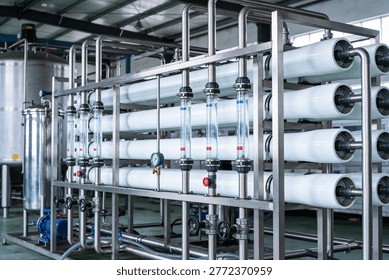
The principle of pervaporation begins with the evaporation of a liquid. A liquid mixture is evaporated, and its gaseous form is introduced to a membrane. The gaseous mixture is allowed to permeate through the membrane selectively. Only molecules that fit through the standardized diameters of the membrane’s pores are able to pass to the other side and move forward in processing. The rest of the mixture is directed away from the membrane for a different process, or for treatment and disposal. In this way, the method of pervaporation with the use of membranes is able to separate desired low-concentration components of liquid mixtures.
The vacuum of the pervaporation system is sourced from a vacuum pump. Introducing sub-atmospheric conditions to the system allows for increased efficiency, as the vacuum enlarges the pressure differential on the other side of the membrane that is able to draw the gaseous mixture towards it, through the membrane. This results in an accelerated rate of membrane pervaporation processing, as the molecules are moving at a quicker pace thanks to the suction of the vacuum pump.
The sub-atmospheric conditions also allow for a lower boiling point of any liquid mixture. This is because the atmospheric pressure that is typically exerted on all matter on Earth pushes down on the liquid mixtures, reinforcing the intermolecular bonds that the liquid has that are keeping the mass from phase shifting into gaseous matter. With the lessening of this ambient pressure, the intermolecular bonds of the mixture are easier to break, lowering the temperature and energy required to boil and evaporate the liquid mixture.
The vacuum pressure also discourages the existence of azeotropic mixtures. Membrane pervaporation takes advantage of the varying boiling points of the constituents of the liquid mixture. At atmospheric pressure, however, many components may have similar or equivalent boiling points. At sub-atmospheric conditions, the azeotropic mixtures separate and exhibit differing boiling points, allowing for easier and higher quality separation of the desired low-concentration constituents.
Using vacuum to lower the heat energy also allows for solvent recovery. Certain solvents and volatile organic compounds may degrade under intense heat, significantly affecting the quantity and quality of the resulting yield. Utilizing negative pressure via vacuum pump creates the opportunity for the lowered heat energy at which the liquid still boils.
View our Products
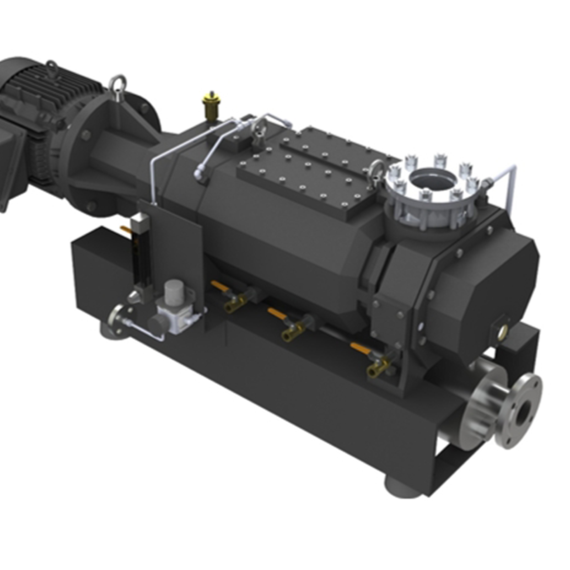
Despite the increased level of vacuum required in cases such as the chemical and pharmaceutical industry, the dry screw vacuum pump is more than capable of exceeding the typically recommended ultimate vacuum level for membrane pervaporation. The dry screw vacuum pump is able to reach such high levels of vacuum because of its lack of a working fluid. This means that there is no limitation of vapor pressure, no constant fluid maintenance and changing, no costs for constructing a designated fluid supply line. NES Company Inc. is proud to offer our NSP Series dry screw vacuum pumps with spare parts kits, gas ballast kits, exhaust silencer kits, and more.