
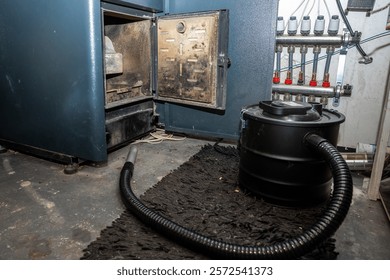
Vacuum Furnaces and Ovens
Heating elements that are used to change the physical properties of a product.
Heat treatment is often performed on metals to alter their physical properties towards a certain industry’s standards. The method of heat treatment varies depending on the desired result. Treatments like brazing and sintering can be performed in a furnace. One issue remains throughout all forms of heat treatment: as the metal is being treated, it is constantly exposed to high concentrations of elements in the atmosphere that are detrimental to the metal making process. Oxygen is able to dissolve within molten metal and form voids, or pockets of air, within the metal. The end result is a nonuniform metal lattice with holes and uneven crystal structures that severely compromise the structural integrity of the metal, as well as detracting from the desirable physical properties.
Hydrogen can be introduced in large concentrations through localized heat treatments or additive methods such as welding. Hydrogen is especially harmful because of its small size, dissolving into the metal towards the edges and ends of the metal grains. Hydrogen voids end up forming at the most vulnerable areas of the metal grain, significantly reducing the durability of the metal, making it brittle and weak. To combat these reactions between treated metals and atmospheric elements, vacuum furnaces are employed. The principle behind the apparatus is that the metal is to be treated in a chamber evacuated of such harmful elements so that the metal will be stronger with more ductility, machinability, and staying power.
Bright annealing, one example of heat treatment, is the process of relieving the internal stresses that are built when the metal cools and hardens as it is being pressed and formed. As this happens, the grains of the metal hold compressive stresses and “lock in” to the imperfect structures and shapes that they are pressed into. This results in a weaker metal, which is an issue when the metal is to be used for support in the form of beams or pillars. Reheating and softening the metal without melting allows it to keep its shape while also letting the grains reform, creating bigger and more structurally sound shapes as well as relieving the stresses.
Vacuum ovens are similar to vacuum furnaces, but with key differences. Vacuum furnaces are primarily used for heat treatment processes, allowing for higher temperatures and controlled atmospheres to enhance material properties. Vacuum ovens are typically used to dry, cure, or age materials, providing a controlled environment to remove moisture or solvents from products at lower temperatures than furnaces. Vacuum furnaces require deeper vacuum than vacuum ovens and are often equipped with sophisticated cooling systems to quickly quench materials after processing, where ovens typically cool passively.
View our Products
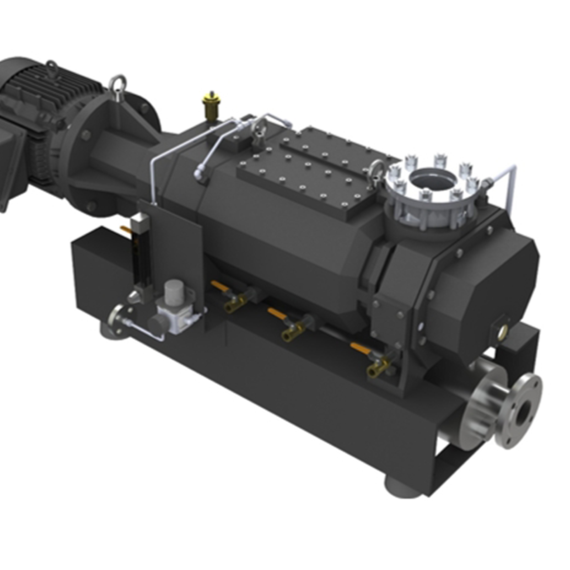
The dry screw vacuum pump is often used for vacuum furnace applications. This particular type of vacuum pump is favored for its high vacuum level. This is due to the lack of a working fluid, which limits other vacuum pumps in their ultimate vacuum level because of the vapor pressure of the working fluid. The dry screw vacuum pump is highly energy-efficient and reaches deep vacuum. NES Company Inc. is proud to offer our NSP Series dry twin screw vacuum pumps, standing a cut above the industry standard by offering a spare parts kit for your own DIY simple repairs.
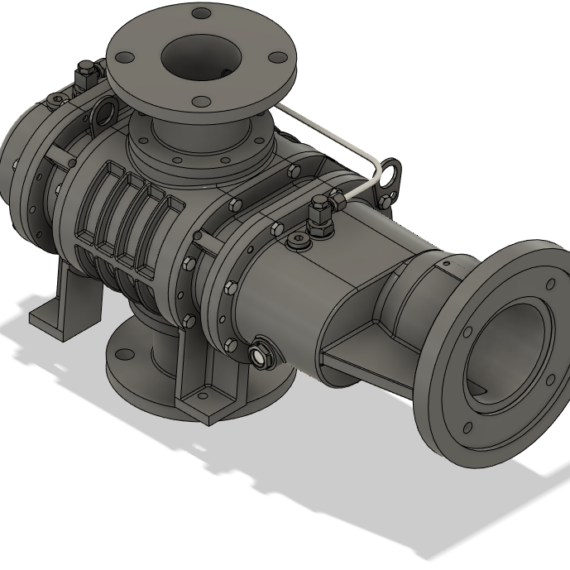
The vacuum level inside the chamber of the furnace often needs to be near complete vacuum conditions. A booster brings a higher CFM-to-HP ratio, improving the pumping speed of any system and allowing for a deeper vacuum level for roughing pumps. The NB Series two-lobe vacuum booster boasts a five-point bearing design with double oil tanks for the ultimate stability and security. The oil tanks are protected by a nitrogen gas barrier, which prevents process gasses from contacting the oil and hindering performance.
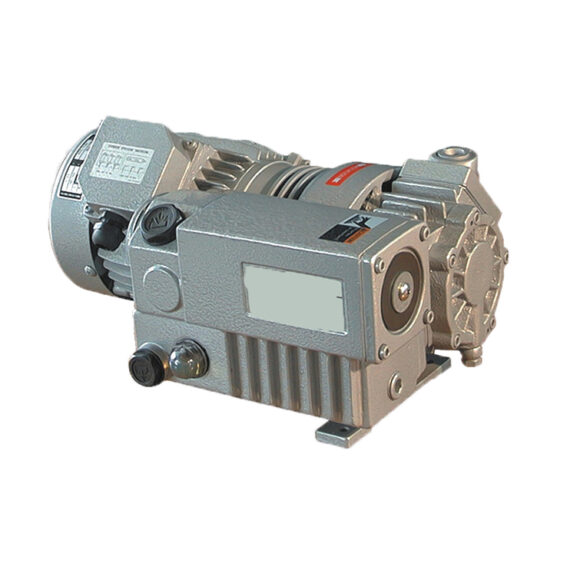
Vacuum ovens are used to dry, cure, and age products at medium vacuum levels. For this application in small capacity, rotary vane vacuum pumps are often favored for their low installation cost, consistent performance, low noise, compact size, and simple maintenance. The NRV Series single stage, oil-circulated rotary vane vacuum pumps are small to medium-capacity vacuum pumps.
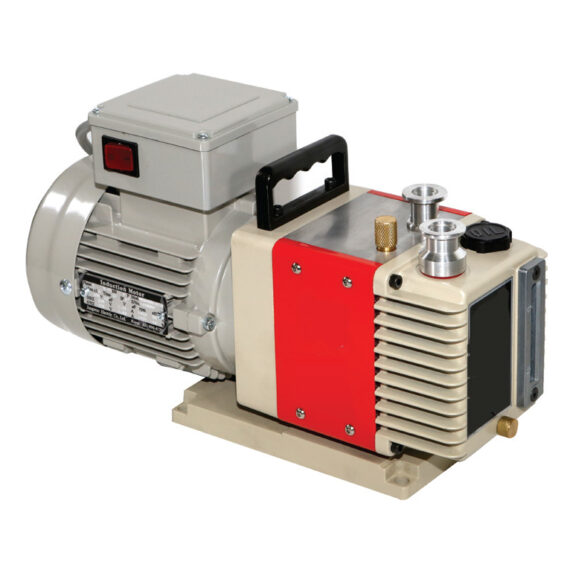
For even deeper vacuum levels with the same benefits of a rotary vane vacuum pump, NES offers the NTRV Series two-stage oil-circulated rotary vane vacuum pump. This small-capacity series reaches an ultimate vacuum of 0.001 Torr and up to 63 CFM with a one-year warranty against manufacturing defects.