Freeze Drying (Lyophilization) and Sublimation
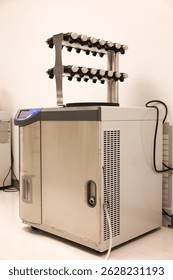
Freeze drying, or lyophilization, is the process by which hydrated products are frozen so that their moisture content can be sublimated, effectively drying the product. Without a vacuum pump to evacuate the lyophilization chamber, this simple and popular process is impossible.
The freeze drying technique has been used as a preservative method against bacteria and oxidation for several decades. Moisture retained in animal or plant matter encourages the growth of bacteria, decaying the product and decreasing the marketability of the product. This is also applicable in research settings, where biological samples may erode or decay in the presence of water. In such cases, drying techniques are employed. Reducing the moisture content of the sample or product provides less reactant for bacteria to enact their degradation process upon said product or sample.
The lyophilization process takes place in 3 steps. The first step is freezing, where all of the water or solvent in a solution is frozen. When frozen slowly, the water forms large ice crystals, potentially growing too large and tearing molecular bonds in the sample or solute. As such is the case, the freezing process is typically done as quickly as possible, forming small ice crystals within and around the load.
After the freezing step is the primary drying, or sublimation. The pressure of the chamber is very low. At this point, the ice is able to transition from solid straight to its gaseous phase due to the lack of atmospheric pressure allowing for a liquid phase. As the ice sublimes, it draws heat out of the sample, cooling it and slowing the drying process. To counter this effect, the lyophilization chamber is heated slightly, countering the cooling and raising the pressure at which the solvents sublimate.
The third step is desorption. When water is chemically attached to the sample via hydrogen bonds, the molecules do not freeze. The heat of the chamber is raised while sustaining the low pressure to loosen these bonds and cause the water molecules to detach from the sample. At this point, removing water needs to be done carefully. Removing this bonded water will inevitably leave voids in the solute; too many voids or too large voids will cause the solid to collapse due to its lack of structural integrity.
After the lyophilization process, the sample or product is ideally fit for longer shelf life, resistance against bacteria and mold, constant quality, and resistance to oxidation. For mass-production of frozen foods, preservation of vaccines, or production of super dry powders, lyophilization is a powerful tool that is able to provide control that leads to quality material.
View our Products
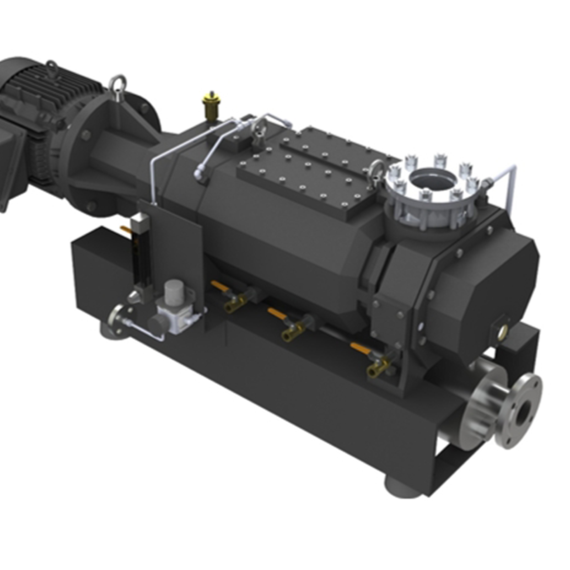
The dry screw vacuum pump does not require any working fluid to operate. This means that there is no oil to maintain and change, no water supply lines, no filtration or preventative measure for discharge contamination, and no need for proper treatment and disposal. Most importantly, there is no limitation of vapor pressure for the pump to operate off of, allowing it to reach high levels of vacuum. NES Company Inc. is proud to offer our NSP dry double screw vacuum pump series, complete with a selection of metallurgy and optional kits such as gas ballast kits, exhaust silencer kits, and spare parts kits.
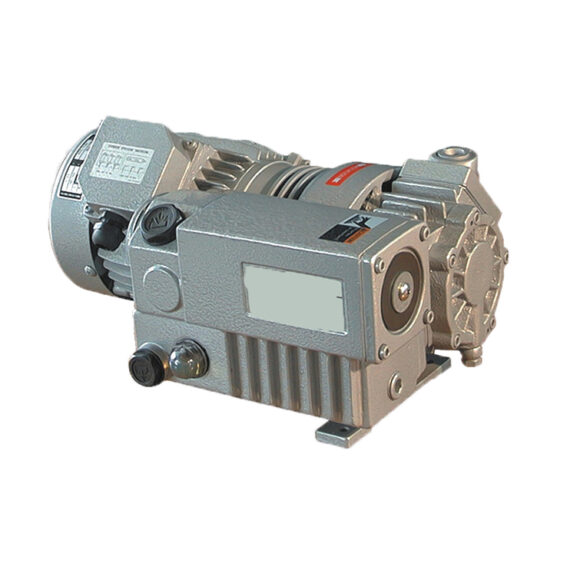
The NES Company Inc. NRV series oil-flooded single-stage rotary vane vacuum pumps are robust with a simple design. The oil-lubricated rotary vane vacuum pump is able to reach the levels of vacuum required for lyophilization techniques on its own without a forepump, and its circular design allows for constant suction with minimal phases. Rotary vane vacuum pumps are far more inexpensive compared to other dry-running vacuum pumps.