Material Impregnation using Vacuum Pump
Impregnation is a process by which liquid materials such as resins and acids are soaked into a solid material to impart certain physical properties. Vacuum is a tool that increases the rate and evens the distribution of impregnating agent throughout the material.
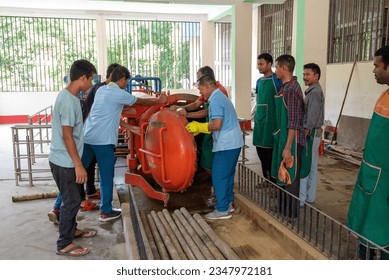
Vacuum impregnation takes place in a large batch impregnation apparatus. This apparatus is designed differently depending on the method being employed. Generally, there are three distinct methods of vacuum impregnation: wet vacuum (WI), dry vacuum (DI), and dry vacuum & pressure (DVP).
The general process of vacuum impregnation is as follows: first, the loading chamber is charged with a batch of product. The loading chamber is then evacuated, and a vacuum pump or compressor is turned on to force the impregnating agent to flood the chamber. The agent is pushed or pulled into the batch, penetrating into the material for a calculated and extended period of time before it is drained from the chamber to be disposed of or reused. The yield is a new material composite that exhibits an increased quality in the specific intended aspects desired by the manufacturing plant.
DV starts with two connected chambers: one on top to hold the loaded material and a bottom chamber to store the impregnating agent. The top chamber is first loaded with a batch of material. The top chamber is evacuated of air by a vacuum pump, and the negative pressure is held as the agent gets degassed by the same vacuum pump. All vacuum is released and the agent is pumped into the top chamber. Because the sealing procedure is influenced only by atmospheric pressure, it takes very long to complete and does not have a very high penetration rate. The DVP process counters this with an added step.
DVP starts with the same setup: parts are loaded into the top chamber and evacuated of air. Military standards require a vacuum level of at least 29” Hg, only 0.92” away from a perfect vacuum. This is done to ensure that the microscopic pores within the material are emptied of all air and hold vacuum within themselves. The vacuum is then released and positive pressure is built up in the loading chamber as the impregnating agent is pumped in. The material is held in the pressure and the agent to ensure maximum penetration of the agent into the material.
Dry vacuum processes are often done under intense vacuum, which is why a rotary vane vacuum pump is included in the system as a backing pump for a high-vacuum level rated pump like a turbomolecular pump.
View our Products
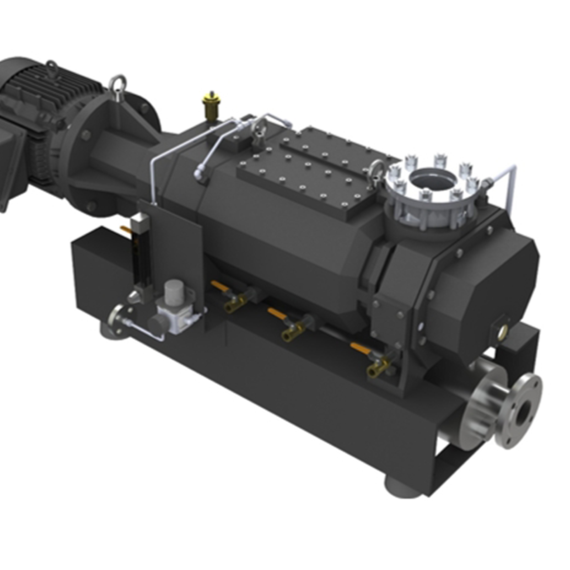
It is typically recommended that the loading chamber reach a vacuum level of approximately 23 Torr to be considered prepared for the impregnating agent flooding to occur. The average dry screw vacuum pump is able to reach much higher vacuum levels than this, partially due to the fact that the dry screw vacuum pump is designed to operate without any working fluid. The lack of a working fluid translates into a lack of constant maintenance and changing. NES Company Inc. is proud to offer our NSP dry double screw vacuum pump series design with optional kits such as gas ballast kits and exhaust silencers kits.
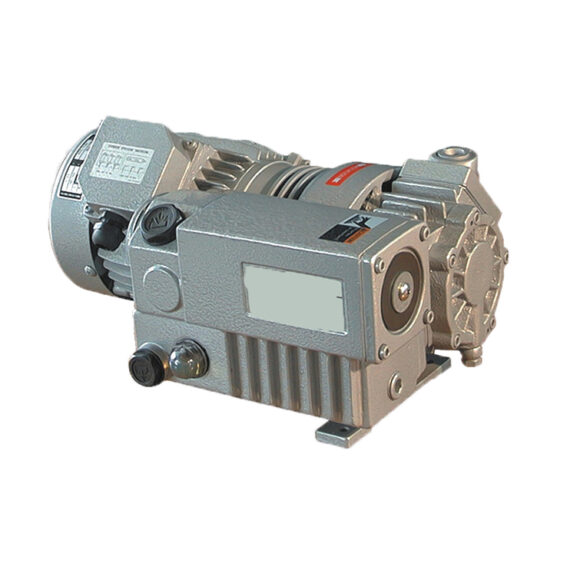
Rotary vane vacuum pumps are often used in impregnation systems with minimal metal-to-metal contact, low electrical cost of operation, and simple design. The rotary vane is excellent on its own for application of lower levels of vacuum in impregnation processes of the building material industry, and most popularly used as a backing pump for the higher levels of vacuum required for deep vacuum impregnation of material like sintered metal. The metallurgy can be carefully selected for resistance against the corrosive qualities of any such impregnating agent.