Vacuum Conveying
As mass production grows in worldwide application, the conveying of products became essential for industry operations. Conveying operations, whether it be methane or milk bottles, are enhanced to a new level of efficiency using vacuum.
Vacuum conveying is the method of moving products further down the production line through suction to relocate products. Vacuum conveying takes many forms: sometimes suction arms are used to lift products and place them on different lines. Sometimes suction pads are used to package products, and especially in the paper industry, suction rolls guide the direction and increase the acceleration at which thin products are processed. The essence of vacuum conveying is this: if a product needs to be removed from its belt to be moved in a different direction or onto a different of the process, vacuum conveying picks it up and puts it down where it needs to be.
Using robotic arms does a similar job, but cannot be done with a large amount of fragile products. Extra expense and care must be taken so that the arm is properly calibrated and equipped with the ability to handle such a task. Magnetic pick-and-place operations do a similar job with similar quality, but can only be applied to magnetic products.
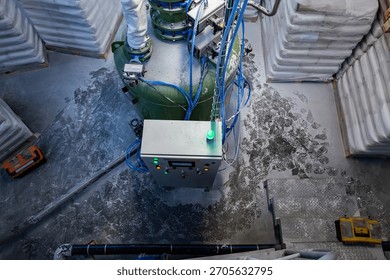
Besides vacuum-mechanical operations, there are methods of vacuum conveying that transport powders and bulk solids from a silo across large distances of piping. This kind of conveying is also implemented in fly ash recovery in power plant processes. By using vacuum instead of a positive pressure method that pushes the material through the pipe, the process can be done with minimal amounts of dust in the piping and the pump as the negative pressure draws it out before beginning the conveying process.
Pneumatic conveying systems make the processing of fly ash incredibly efficient, as the pressure of the system guides the ash in ways that other methods, like conveyor belts or hydraulic conveying, cannot. Positive pressure conveying systems employ a compressor or blower, typically to draw from one source and push to multiple distribution points. Negative pressure systems, or vacuum conveying systems, employ a vacuum pump and typically draw from multiple sources towards a central storage or distribution point.
Fly ash is fine particulate matter generated from burning coal. It can contain elements that are toxic or carcinogenic, leading to respiratory issues and an increased chance of lung cancer. Especially when generating power, significant amounts of this matter is produced on a daily basis, creating a need for proper processing and disposal. Fine ash particles are carried with the flue gasses, also generated by the combustion reaction, to particulate-gas separators like electrostatic precipitators or baghouses. The solids fall to the bottom of the separator into hoppers, from which they are transported through pneumatic conveying systems to storage silos or disposal areas. The fly ash can then be used to manufacture concrete, cement, or bricks such that it is no longer particulate and an airborne health hazard.
View our Products
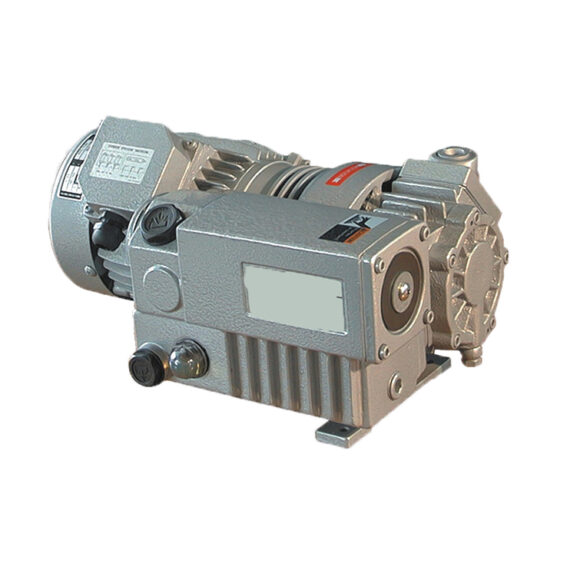
Oil-flooded rotary vane vacuum pumps are optimal for vacuum-mechanical operations such as suction rollers, vacuum pads, and vacuum arms. An oil-circulating rotary vane vacuum pump is so widely used because it has numerous desirable qualities that make it an obvious choice. The oil seals the microscopic gaps between the vanes and the chamber, resulting in a higher achievable vacuum level than a dry-running rotary vane vacuum pump. The NRV Series single stage oil-flooded rotary vane vacuum pumps are reliable and affordable.

In clean environments, an oil-flooded rotary vane vacuum pump is not acceptable, as it must consistently maintain 15”HgV at minimum to prevent oil mist from exhausting out of the pump. In these cases, the dry-running rotary vane vacuum pump becomes the more reliable option, with carbon-composite vanes that self-lubricate as the pump begins to rotate. NES Company’s NDRV Series is optimal for small-capacity medium-vacuum applications.
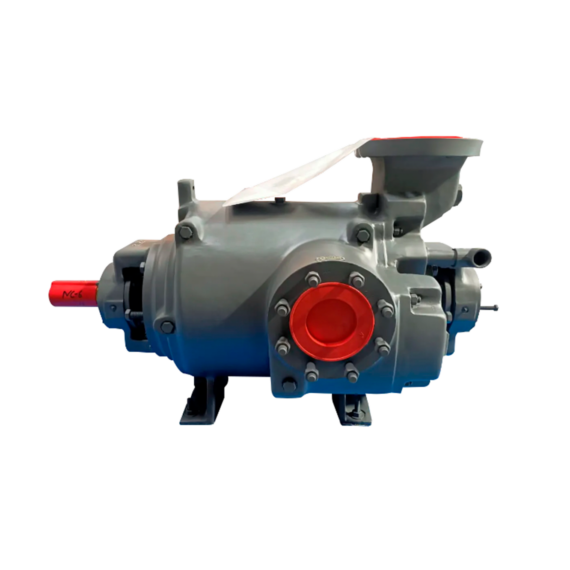
For the vacuum conveying of particulate matter or vapor, a liquid ring vacuum pump is the optimal choice. This pump boasts a tolerance to liquid and particulate carryover thanks to its liberal clearances, known to last for decades with minimal maintenance. The liquid ring creates an isothermal processing environment and protects the pump’s material of construction against abrasive or corrosive substances. NES Company Inc. offers the NC Series in stainless steel as the leading choice for conveying applications.
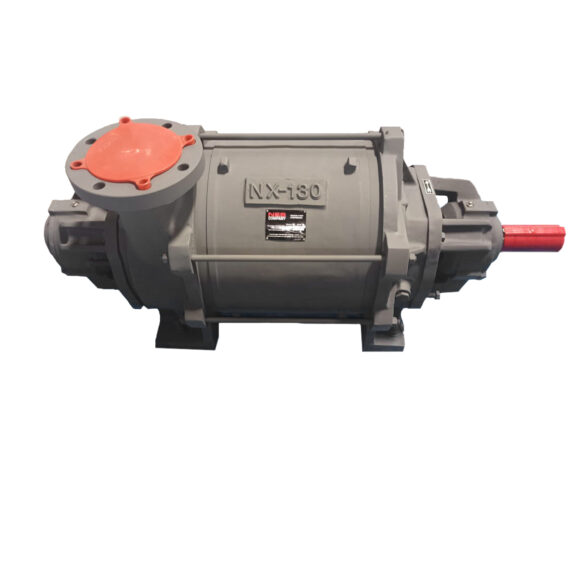
NES Company’s NX Series is available in a variety of materials of construction, boasting a more compact frame than the NC Series for space-saving considerations. The NX Series provides the same benefits as the NC, handling liquid carryover and slurries with relative ease and excelling in the processing of abrasive, corrosive, combustible, or hazardous materials with the proper metallurgy.